The A-story is the main goal that drives the protagonist.
The B-story is a parallel subplot that explores the protagonist's internal, emotional growth.
The completion of the B-story should impact the resolution of the A-story.
A great example of this dynamic can be found in the original Star Wars (1977).
• A-story: Luke's journey from farm boy to Jedi, culminating in the destruction of the Death Star.
• B-story: Han’s transformation from a cynical, money-driven smuggler into a hero of the Rebellion.
When Han’s B-story concludes, he is no longer motivated solely by self-interest. As a result, he saves Luke, who is then able to blow up the Death Star.
If a B-story does not impact the A-story, the narrative is often considered flawed. In almost all cases, a disconnected subplot leaves the viewer with a wasteful "so what?" feeling.
In the Elementary episode "Lesser Evils," (Season 1, Episode 5) the A-story follows the hunt for an "Angel of Death" serial killer murdering patients at a hospital. The B-story follows Joan coming to terms with her past failure as a doctor. When Joan successfully saves a patient's life by manipulating the patient's medical charts, Sherlock realizes the Angel of Death may have manipulated the victim's medical charts. Sherlock reassess the victim's medical charts and catches the killer, binding the two storylines together.
B-Story Plot Points & Breakdown
1. The Misdirection (The Opening Scene)
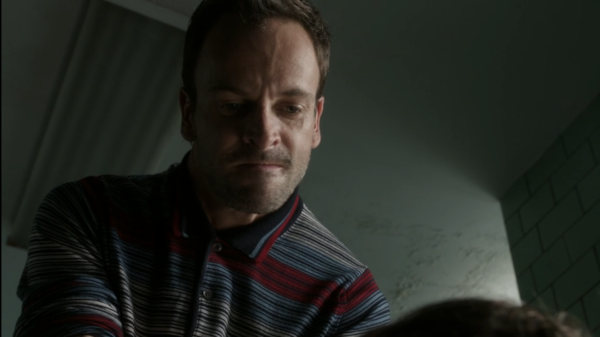
The episode features an intriguing opening: Sherlock is seen choking a man, but the "victim" turns out to be a corpse in a hospital morgue. This scene serves as a quick, clever misdirection; what we think is happening is not. Sherlock isn't in a fight -- he is simply studying post-mortem bruising.
2. Confronting the Past
In the morgue, Sherlock calls out Joan's visible discomfort and cites her status as a "disgraced surgeon" as the cause. Though Joan protests, she quickly drops the argument, though she clearly remains annoyed. She states her reason for being there plainly: "I go where you go."
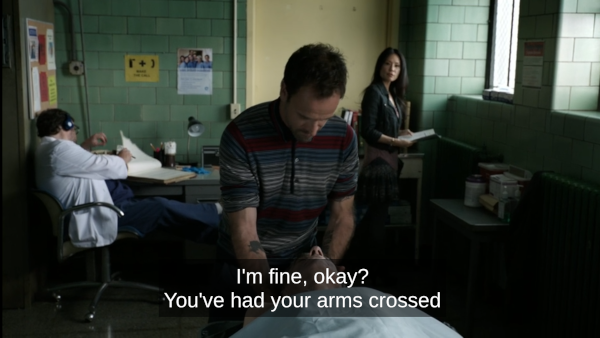
This interaction establishes their character dynamics. Sherlock is a blunt, socially crude individual, while Joan is a non-confrontational but dutiful sober companion. By establishing that she goes where he goes, the narrative sets up the emotional trajectory of the B-story: Joan will confront her past "disgrace," regain her confidence, and ultimately transition into becoming a detective.
3. Establishing Credibility
Sherlock discovers a minor wound on a corpse and deduces that the patient's heart attack was artificially induced by epinephrine. The "natural death" was actually a murder.
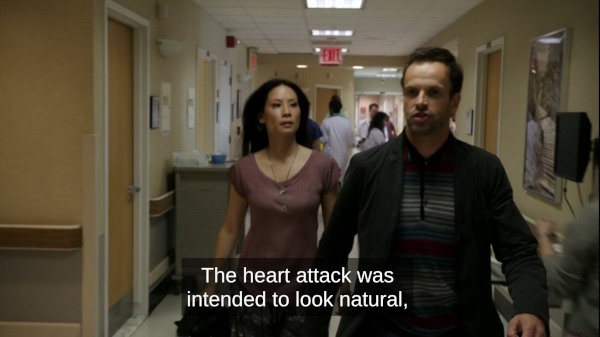
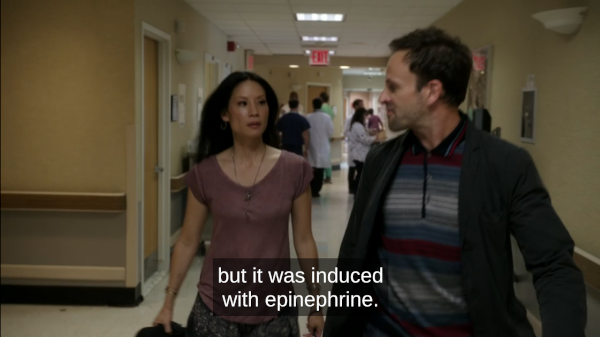
As a former doctor, Joan serves as a trusted source of information for the audience. She spares the viewer from having to untangle dense medical jargon. For example, when Sherlock notes the wound is the result of "ischemia" from epinephrine administered during cardiac arrest, Joan counters that ischemia would not happen if the heart had already stopped. Therefore, the drug must have been administered while the patient was still alive.
While the average viewer cannot easily verify if this medical dialogue makes sense, they don't have to. Joan's professional confirmation allows the audience to follow along and fully buy into Sherlock's subsequent declaration: "We're investigating a murder."
4. The Counterbalance to Sherlock
Joan's medical expertise offers credibility to Sherlock's claims, but her stability and normalcy also work as a vital counterbalance to his neurodivergent, highly eccentric characteristics. Sherlock frequently crosses social boundaries. However, if Joan is okay with his behavior, the viewer feels comfortable with it too. When Sherlock becomes too irascible or his comments grow questionable, the audience is able to ground themselves by viewing the world through Joan's stable perspective.
5. Exposition via Eccentricity
Joan runs into a former colleague, Dr. Carrie.
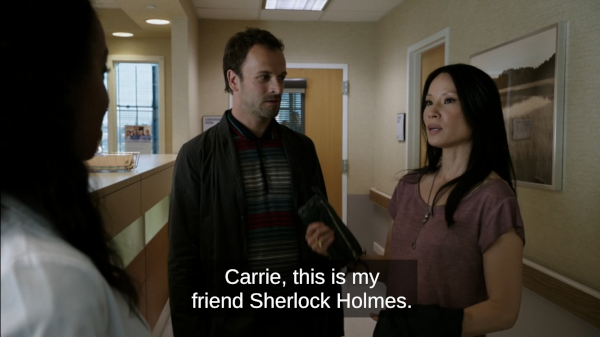
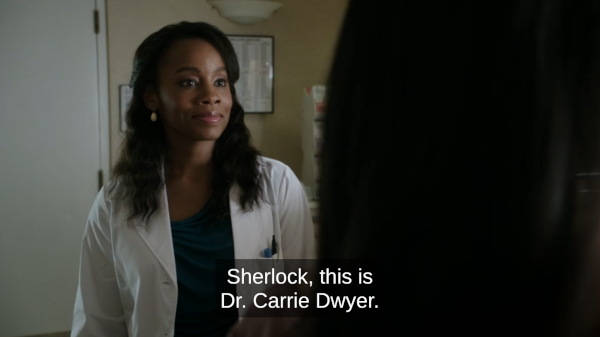
Sherlock's blunt personality provides rapid exposition when he describes their interaction right in front of Carrie: "Interesting that she didn't refer to you as her friend. Probably because of your falling out."
Joan dismisses his crude assessment and tells Carrie, "I'm done with medicine," and that she has "decided to move on." While Sherlock is completely tactless, Joan handles it gracefully, allowing the viewer to accept the awkwardness. The B-story progresses: Joan is actively trying to move on from her medical career. Sherlock's eccentric personality enables a swift, perfectly in-character exposition dump.
6. The Confession
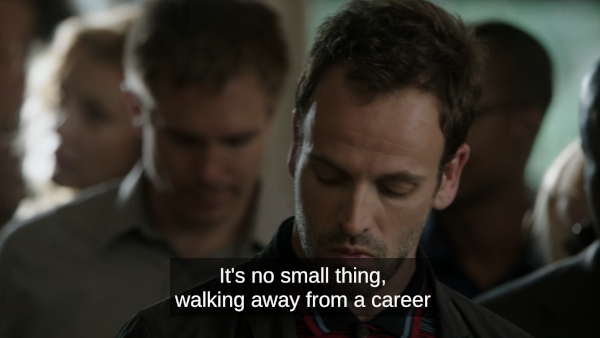
While getting coffee, Joan opens up to Sherlock. She reveals that she let her medical license expire because "it was pretty hard to be a surgeon when you freeze up every time someone hands you a scalpel. I just didn't trust myself anymore."
7. The Climax and Intersection of A and B Stories
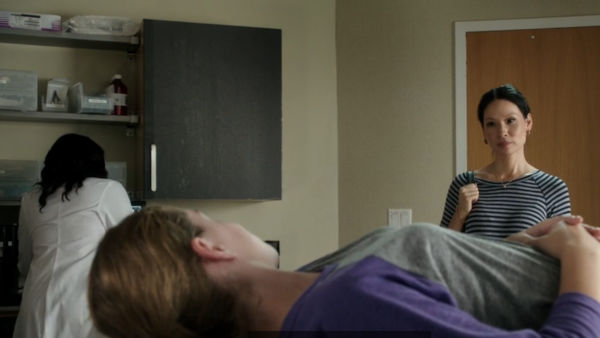
Later, Joan joins Carrie as she works around the hospital and notices an unusual wound on one of Carrie's patients. Joan recommends running a specific diagnostic test to check for a rare illness. Though the initial tests reveal nothing, Sherlock encourages Joan to trust her instincts and keep investigating. Joan pursues further assessments but is rebuffed by Carrie.
Later, Carrie visits Joan to admit that Joan was right: the patient did have the predicted illness.
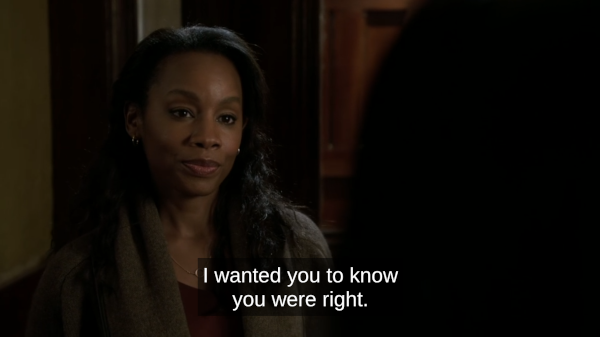
Carrie reveals the condition was caught because an anonymous person slipped a request for the test into the patient's charts. That anonymous person was, of course, Joan. By secretly ordering the test, she saved the patient's life.
Listening to Joan's interaction with Carrie -- specifically how Joan manipulated the patient's charts -- gives Sherlock a breakthrough for the primary murder case.
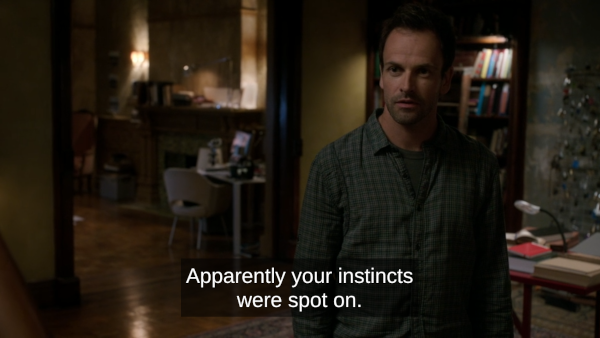
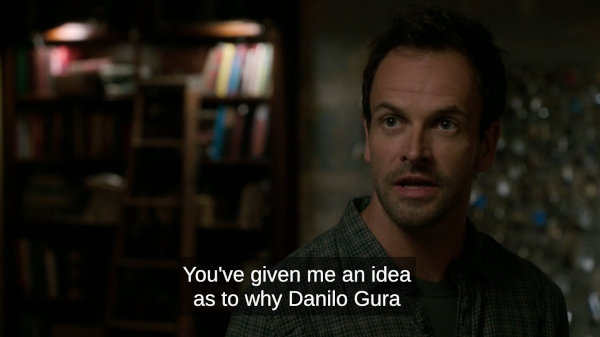
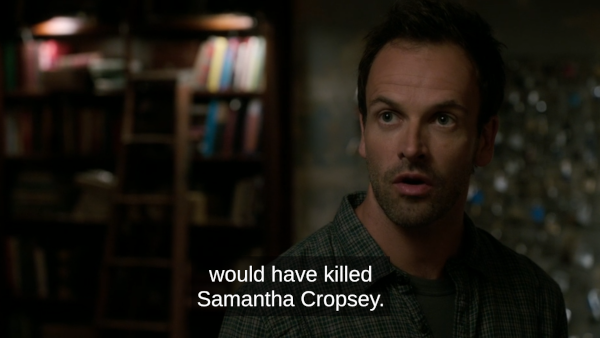
Sherlock finds the hidden medical charts of the "Angel of Death's" victims. Thanks to Joan triggering the idea to explore medical charts, Sherlock identifies the killer, leading to an arrest.
8. Resolution
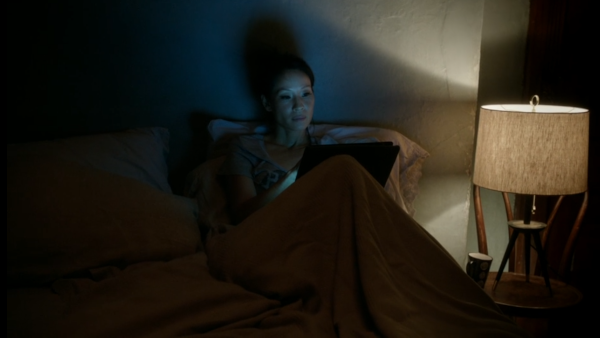
In the final scene, Joan browses through old digital photos from her time as a practicing physician. She decisively deletes them all. The past is finally put to rest.

Watch Elementary:
 Elementary

